A COLLECTION OF THOUGHTS & MEDITATIONS

Reflections

What if there’s more to see? Reflections on Scripture, faith, and the quieter parts of life—shaped by questions, discoveries, and the journey along the way.

Showing all 24 reflections

2025

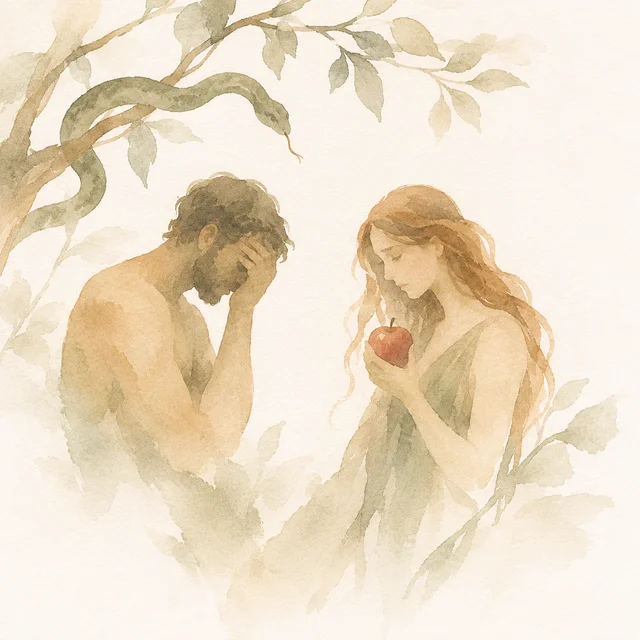
Adam covers his face as Eve holds a fruit beneath a leafy tree
Scripture Revisited

The Genesis of Wounding

A Reflection on Adam and Eve and the First Hiding

Time after time, I find myself drawn back to the Garden. Not as a "once upon a time" story,

Read this reflection Show less

Time after time, I find myself drawn back to the Garden.

Not as a "once upon a time" story,
but as a mirror—
one that shows up in our own lives again and again.

The moment Adam and Eve hid,
covered in shame,
afraid of being seen—
that moment feels deeply human.

And I wonder
if the story of “the Fall”
is less about breaking a rule
and more about breaking relationship.

Less about moral failure,
and more about the aching disconnection
we still carry in our nervous systems today.

What if “the flesh”
is not just weakness or temptation,
but the ways trauma has shaped our wiring?

The ways our hearts have learned to protect themselves.
The anger that flares when we feel unsafe.
The silence we retreat into when we fear rejection.
The masks we wear to be lovable, acceptable, enough.

This is much less about rebellion,
and much more of a reflex.

And when we begin to see our patterns through that lens—
when we see how sin can flow from pain,
from misunderstanding,
from stories of love that felt scarce or earned—

it opens the door to compassion.
For others.
For ourselves.
For the parts of us still hiding in the trees.
Open on its own page ↗
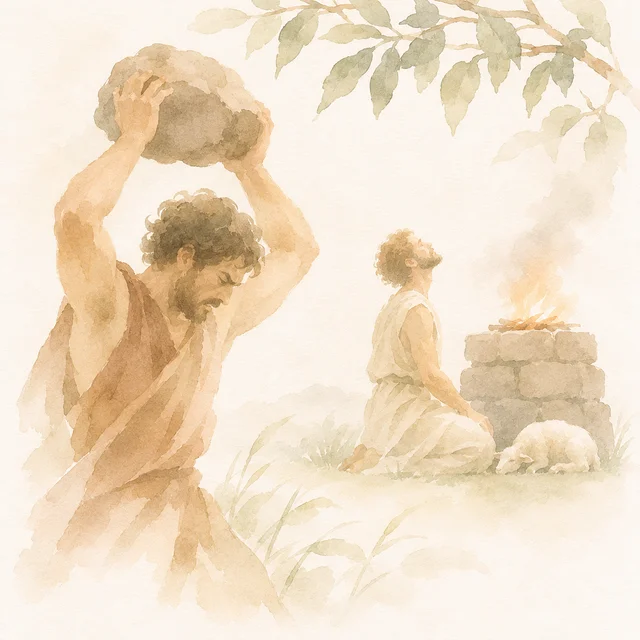
A man raises a stone while another kneels by a smoking altar
Scripture Revisited

The Wound of Comparison

A Reflection on Cain and Abel

Cain’s heart carried a tremor— the ache of perceived rejection.

Read this reflection Show less

Cain’s heart carried a tremor—
the ache of perceived rejection.
Maybe from God.
Maybe from his father.
Who knows what grief was passed down
when the garden gates closed behind them?

So when he saw Abel’s offering,
he didn’t see a gift.
He saw a mirror—
a reminder of something he feared he lacked.
And instead of tending to that ache,
he buried it.

But buried shame doesn’t stay buried.
It hardens into resentment.
And from there, the wound spreads.

The story of Cain and Abel
isn’t just about jealousy—
it’s about the cost of unhealed pain.
When comparison enters,
we forget that someone else’s light
doesn’t mean the absence of our own.

We forget that Love doesn’t measure.
Doesn’t compete.
Love simply invites.
Invites us to show up—
wounded, messy, still enough.

Cain could have chosen a different way.
He could have named his hurt,
let it breathe,
let it heal.
But he hid.

We, too, have a choice.
When comparison stirs,
we can pause.
We can listen.
We can let it rise—
and continue the slow, brave, healing work
of facing what’s within.

Open on its own page ↗
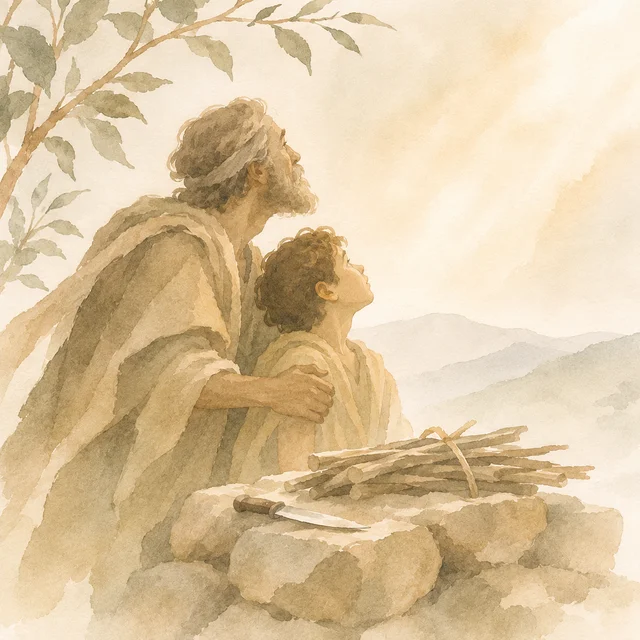
A robed father holds a child beside a stone altar in warm light
Scripture Revisited

What God Never Wanted

A Reflection on Abraham and Isaac

“Do not lay a hand on the boy.” God never wanted Isaac's blood

Read this reflection Show less

“Do not lay a hand on the boy.”

God never wanted Isaac's blood
What He wanted was for Abraham to see.

To see that the story he’d carried in his bones,
the one where gods demand blood,
where love must be earned through pain—
was not this God’s story.

He had walked all this way—step by step—
up a mountain of tension and trust,
carrying the unbearable thought that maybe this was what faithfulness meant.
But this moment—
this voice—
was a rupture in the narrative.

A divine disruption.
A sacred pause.
An unveiling.

The voice of God cutting through inherited fear:
“That’s not who I am.
I do not require your agony.
I am not like the others.
I am not the god you thought I was.”

And maybe He’s still saying that to you.
What picture of God is He gently unraveling?
What sacrifice have you made, thinking it was required,
when Love has quietly whispered,
“Come down. Come home.
You don’t have to prove anything to Me.”

The real offering was never Isaac.
It was your willingness to keep walking,
even in the not-knowing.

And still, the voice of Love interrupts:
“Stop. That’s not what I want.”

Open on its own page ↗
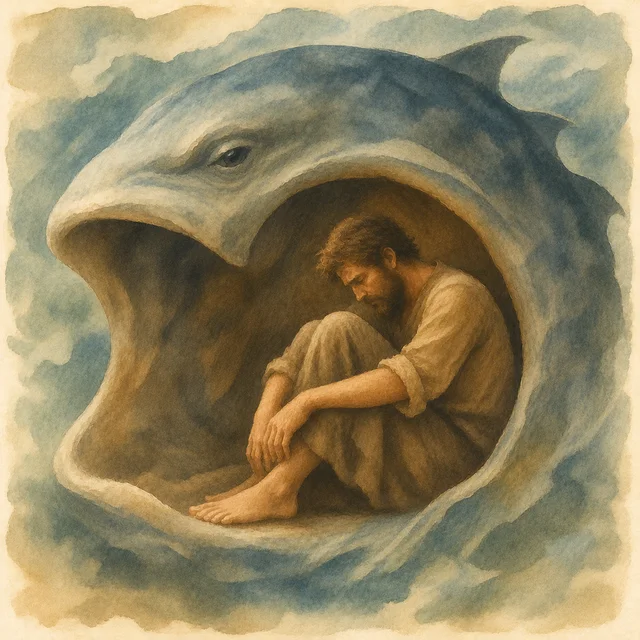
A solitary figure sits curled inside the open mouth of a great fish
Scripture Revisited

The Kindness We Can’t Control

A Reflection on Jonah and the Discomfort of Mercy

Sometimes, we'd rather sit in the dark than let grace extend beyond our boundaries. Jonah didn’t run because he was afraid of failing—he ran because he feared God might succeed.

Read this reflection Show less

Sometimes, we'd rather sit in the dark than let grace extend beyond our boundaries.

Jonah didn’t run because he was afraid of failing—he ran because he feared God might succeed.
That mercy would win. That love would reach too far.

And when it did, he was angry.

He sat beneath a withered vine, sulking under a sun he could no longer escape. He would rather be swallowed by darkness—festering in the belly of bitterness—than accept a God who is more kind, more inclusive, more scandalously forgiving than he could stomach.

Jonah carried a particular narrative—one you might be familiar with—where justice looked like retribution, not restoration. Where being “right” meant standing on the winning side of wrath.

Because if God is that good...
Then maybe the lines we’ve drawn aren’t God’s lines at all.
Maybe the people we’ve written off are still being written into the story.
Maybe the grace we’ve tried to control was never ours to manage.

And still, the story ends with a question, soft but piercing:

“Is it right for you to be angry?”

Can you bear a God who is kinder than you want Him to be?
Can you release the need to be right, and let grace unravel what fear once built?
Or will you stay in the dark, holding onto your anger,
while love keeps blooming on the other side?

Open on its own page ↗
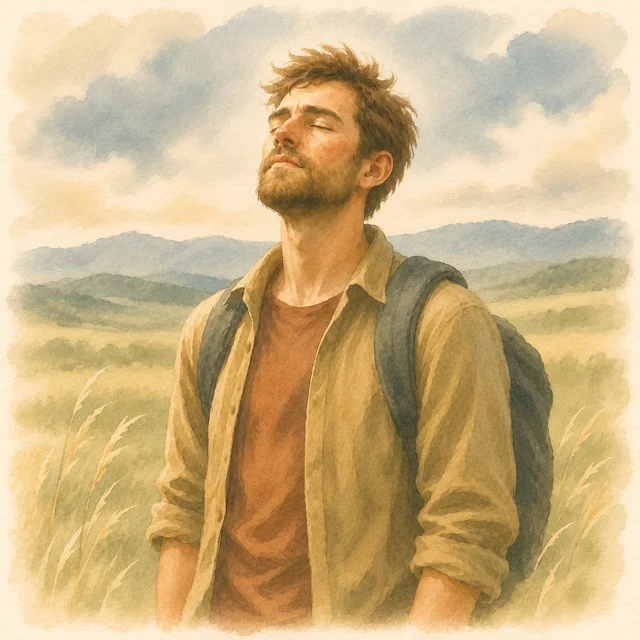
A backpacked traveller stands in open grassland beneath a spacious sky
Meditations

The Space Between Knowing

A Reflection on Uncertainty, Freedom, and the Courage to Trust

We’re learning to breathe again— not in boxed-in rooms of certainty,

Read this reflection Show less

We’re learning to breathe again—
not in boxed-in rooms of certainty,
but in the wild, open air of trust.

A part of us—still shaped by fear,
still sore from the wounds of our captivity—
longs for a map.
Even grace can feel dizzying,
when we realise how wide it really is.

So we reach for structure—
a system,
a guide who looks like they’ve made it,
and promises we can make it too.

Because even as we begin to taste freedom,
our bodies tremble with old instincts.
We flinch at the unknown.
We ache for a leader with answers.

But what we really need
is not a guru—
not a voice with a megaphone and checklist.
We need companions.
Fellow travellers who sit with us in the quiet,
and bless the not-knowing.

Because healing doesn’t come from knowing everything.
It comes from being known—
cradled in the arms of the Father,
the One who is not impatient with our trembling,
who holds us when the path disappears,
who doesn’t rush us through the questions,
but stays beside us in the silence.

Open on its own page ↗
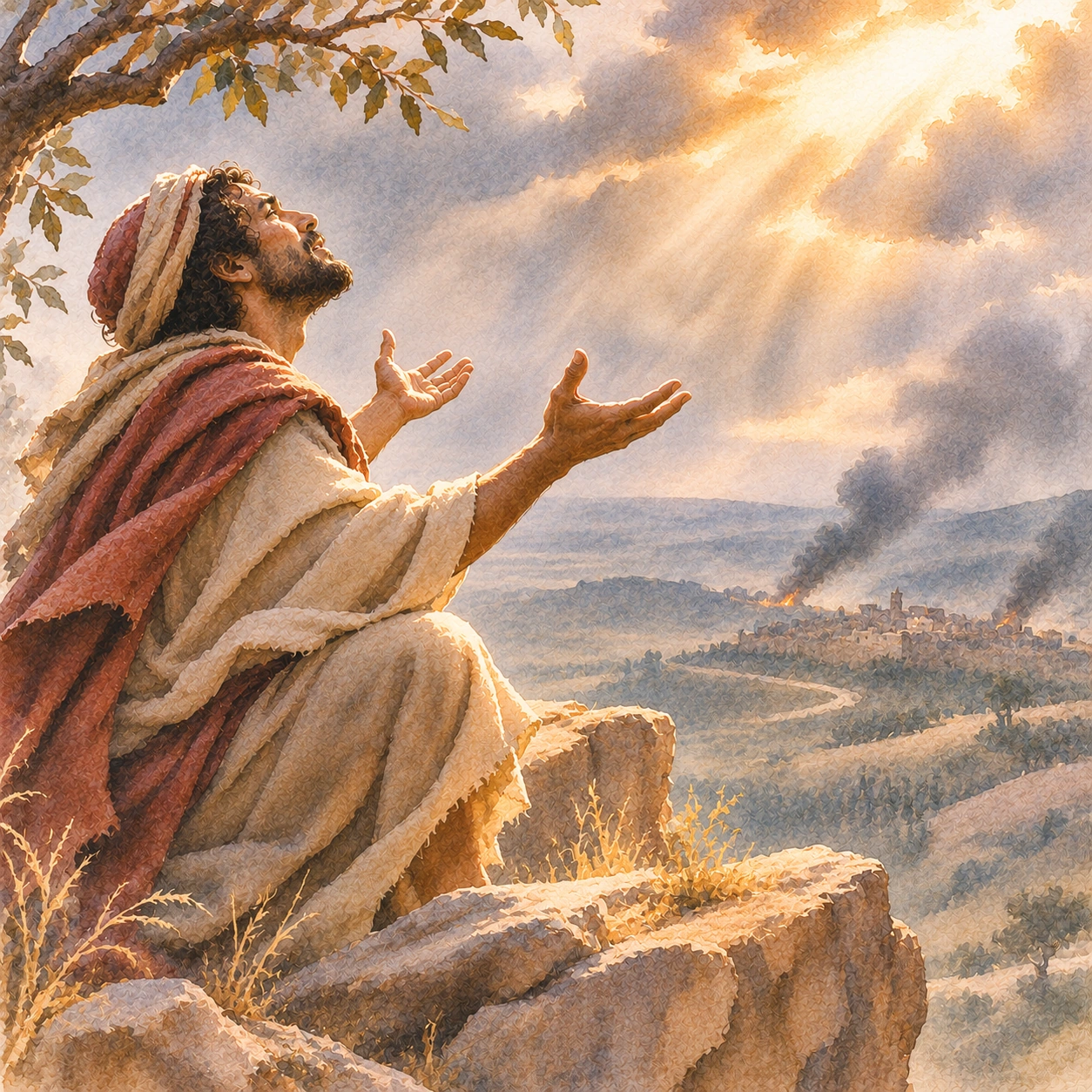
Habakkuk looks heavenward with open hands from a cliff above a suffering city
Scripture Revisited

Too Holy to Look Away

A Reflection on Habakkuk

“Your eyes are too pure to look on evil,” he cried. “You cannot tolerate wrongdoing—

Read this reflection Show less

“Your eyes are too pure to look on evil,” he cried.
“You cannot tolerate wrongdoing—
so why do You?”
Habakkuk couldn’t reconcile what he saw with what he believed.

He wasn’t declaring doctrine.
He was lamenting.
Wrestling with a holy God who wasn’t acting the way he expected—
a God who sees injustice... and doesn’t immediately strike down the perpetrators.
A God who watches, waits, and works in ways that bewilder.

But we’ve taken his cry—his raw ache—and turned it into theology:
“God can’t look at sin.”
And yet the whole book undoes that.

Because God does look.
God doesn’t turn from the mess—He moves toward it.
He answers—not with distance, but with presence.
Not with a lightning bolt,
but with something far riskier:
proximity.

He sees every wound, every act of violence,
every injustice we inflict or endure.
And instead of retreating,
He enters in.

The Holy One steps into the chaos—
not to destroy,
but to redeem.

And to remind “all the earth be silent before Him.”
so that we may finally see God as He really is—
Still looking.
Still loving.
Still leading us home.

Open on its own page ↗
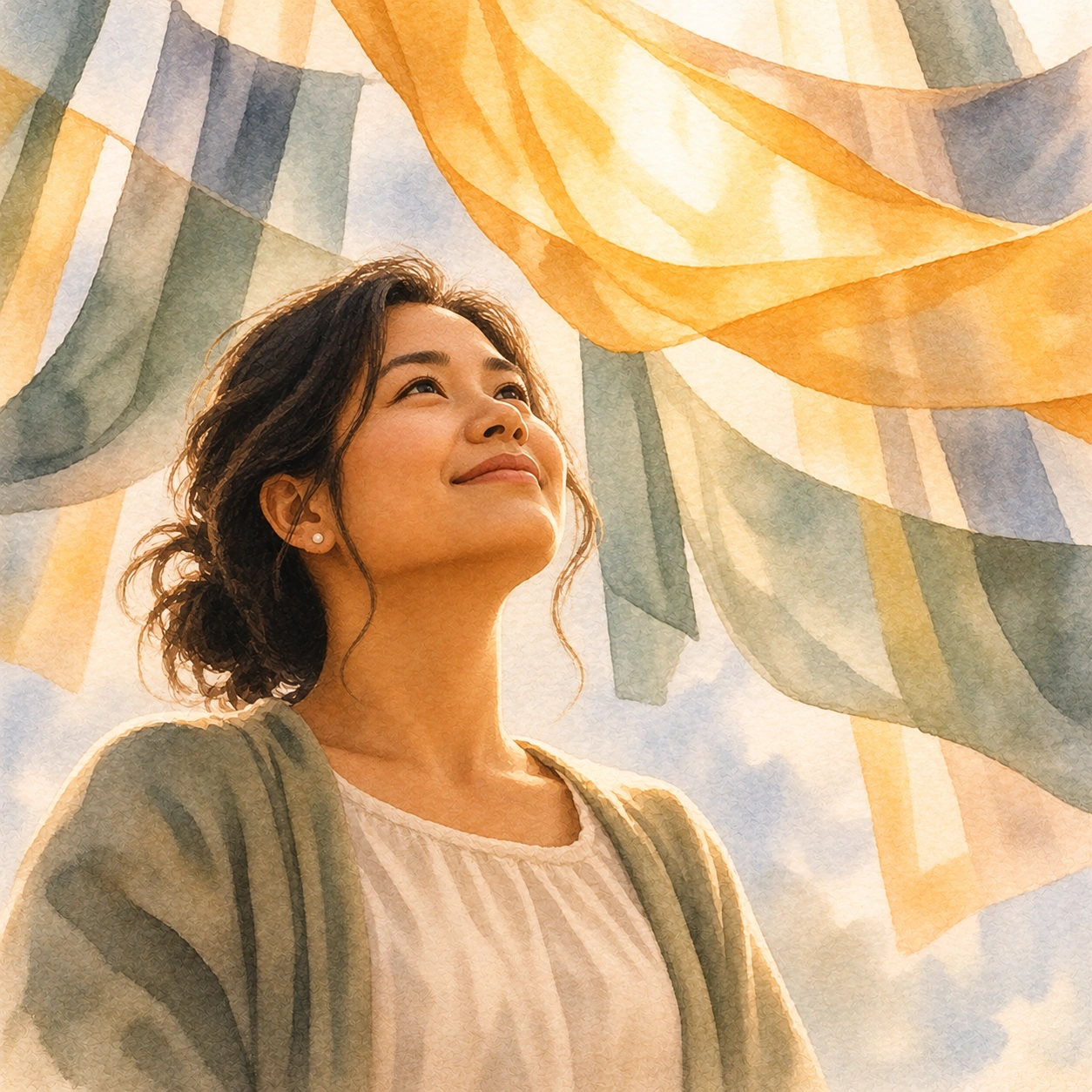
A woman looks upward beneath flowing gold and sage banners
Meditations

The Banner Above You

A Reflection on Identity, Shame, and the Name Love Gives Us

Not Enough. Too Much.

Read this reflection Show less

Not Enough.
Too Much.
Unwanted.
Failure.
Imposter.

You know these banners well.
Maybe they were handed to you long ago—
spoken over you in moments of pain,
whispered in the dark by fear,
reinforced by systems that confused worth with achievement.

And somewhere along the way,
you began to wear them like they were yours.

In ancient times, banners weren’t just decoration.
They marked identity.
They declared allegiance.
They told the world who you were—and whose you were.

So when the beloved declares,
“His banner over me is love,”
it’s not just poetic imagery.
It’s a whole new narrative.
A bold re-naming.

His banner over you is Love.
Not as sentimental fluff,
but as a fierce and tender declaration of who you truly are—
the you that existed before the lies took root,
before shame became your lens.

To live as the beloved
is to begin casting off every lesser label.
To stop living under borrowed identities.
To rest beneath the only banner
that Love Himself ever raised above you:
Beloved.

The old banners may still wave from a distance.
They may still try to call you back.
But when Love is the banner above you,
you know who you are.
And whose you are.

And that changes everything.

Open on its own page ↗
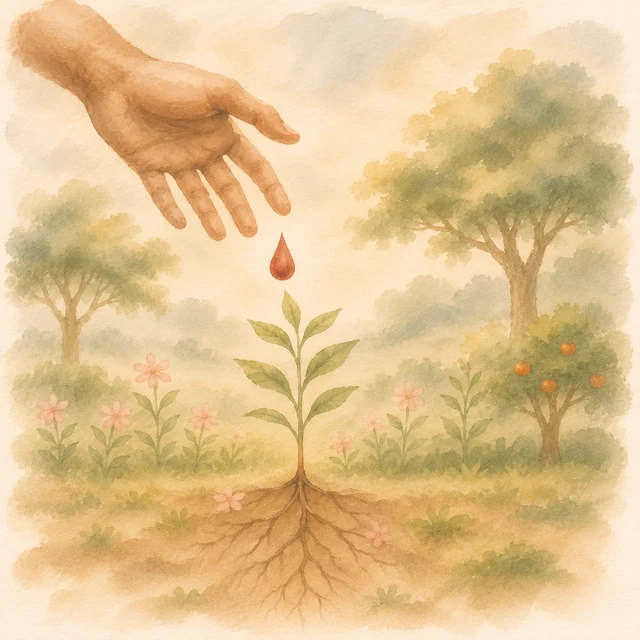
A hand releases a red drop above a green sapling rooted in a garden
Scripture Revisited

The Garden Revisited

A Reflection on Gethsemane and the Undoing of Eden's Wound

He entered the Garden again– not the first one,

Read this reflection Show less

He entered the Garden again–
not the first one,
but the one that bore its echo.

Gethsemane.
A name that means oil press.
And oh, how the weight came down.

Crushing.
Pressing.

Every sorrow.
Every fear.
The inherited ache of Eden itself.

“My soul is overwhelmed... to the point of death.”

Not just with what was coming—
but with everything that had ever come before.

The shame of Adam.
The hiding.
The exile.
The long story of heart-separation.

And now the Son of Man—
this second Adam—
chooses not to run,
chooses not to hide.

His pores weep blood—
the body bearing what words cannot.
A soul being pressed like olives
beneath ancient stones.

His heart cries out,

“If it is possible... let this cup pass.”
Yet he drinks it anyway.

And in that moment,
he bears the full weight of disconnection—
every reflex to flee,
every instinct to protect himself.
He stays.

Gethsemane becomes
the sacred undoing of Eden’s wound.

Not with swords.
But with quiet surrender—
joining with the Father
to bring us back to Garden.

Open on its own page ↗
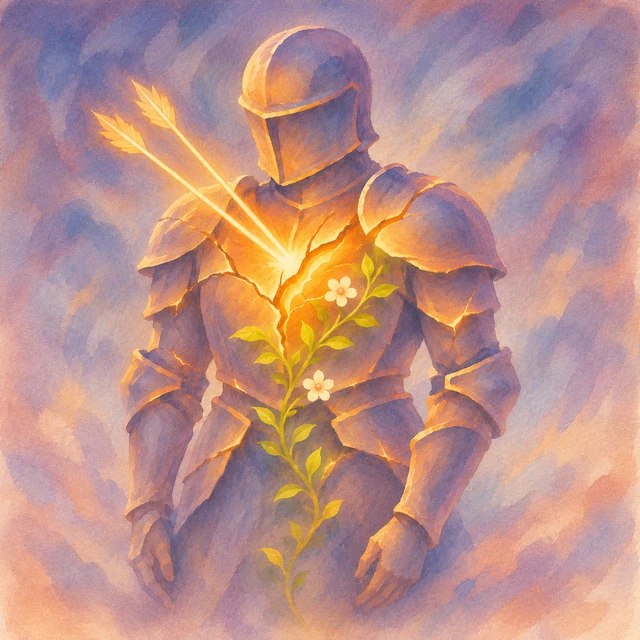
Glowing arrows pierce cracked armour as a flowering vine rises through it
Meditations

Arrows of Love

A Reflection on the Love That Wounds Only to Heal

The only arrows God has ever loosed

Read this reflection Show less

The only arrows
God has ever loosed
in your direction
are arrows of love.

And if they wound—
it is only because
love refuses to make peace
with the idols you’ve carved
in the shape of fear.

It will not leave untouched
the false names you’ve given to God—
names forged in shame,
hammered by control,
passed down like heirlooms.

Love pierces
only to heal,
to peel away the armor
you thought was safety
but was only separation.

Each arrow,
a mercy.
Undoing the lies
that told you
you were ever unlovable.

And when the arrows have done their work,
when the armor falls,
what remains is only this:

the tender flesh of your true self,
open, unafraid—
and the gaze of Love,
still steady,
still sure,
still aimed at your heart.

Open on its own page ↗
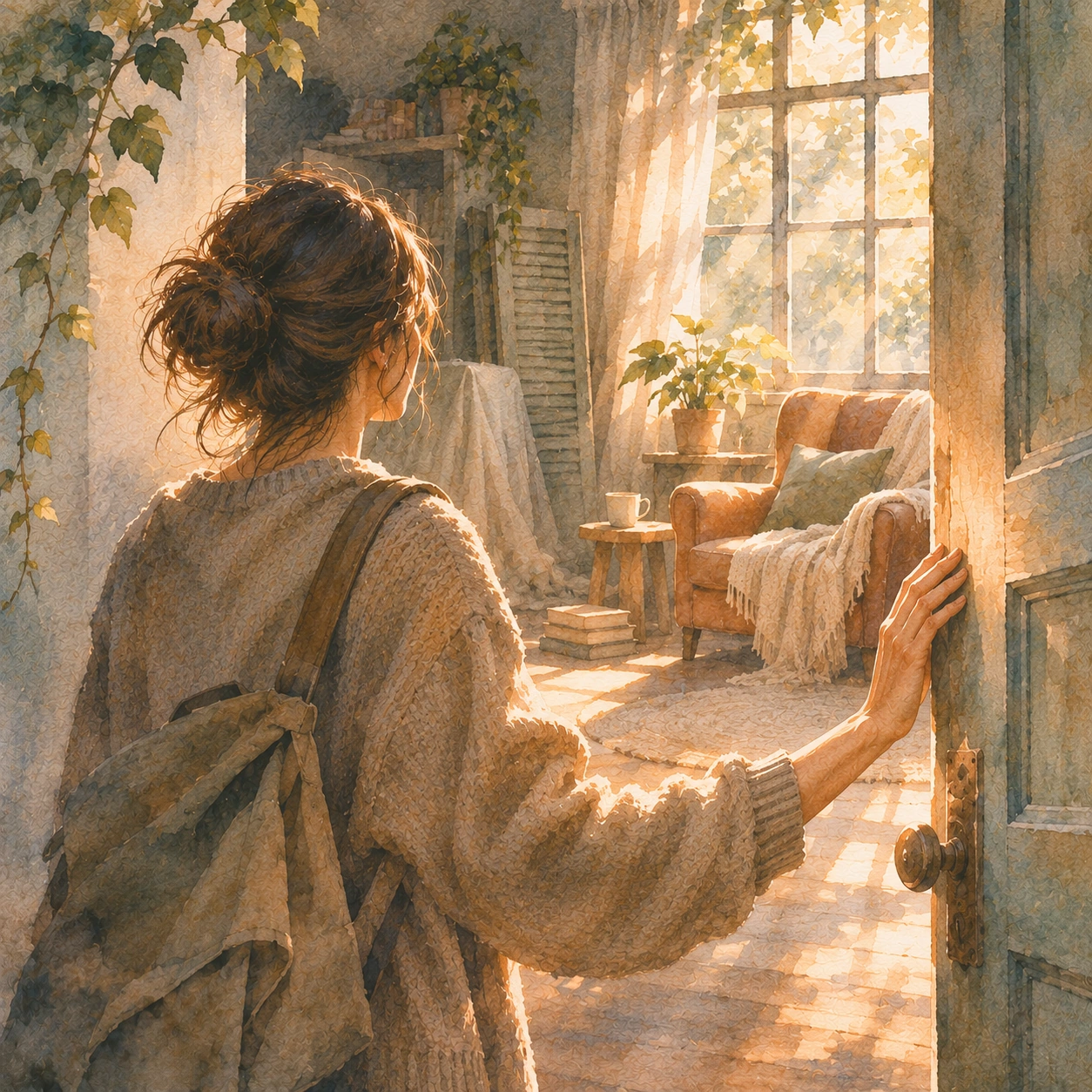
A woman opens the door to a warm, sunlit room with an armchair
From the Heart

The Room You Forgot You Belong In

A Reflection on Coming Home to Your Own Heart

“Ask Jesus into your heart.” For many of us, it was one of the first ideas we were given about faith.

Read this reflection Show less

“Ask Jesus into your heart.”
For many of us, it was one of the first ideas we were given about faith.
A phrase we learned early.
A line we could recite by memory.

But staying there—getting stuck at the doorway—
is to miss the rest of the journey.

Because what good is it to ask Him in...
if we never go there ourselves?

If we keep hovering at the threshold—
letting Jesus into the rooms we refuse to enter.
Letting Love stand inside while we stay outside,
afraid of the ache, ashamed of the mess.

There are places we’ve boarded up tight.
Stories we’ve silenced.
Rooms we’ve labeled unsafe.

We let Jesus in... while we stayed on the porch.

But did you know—
LOVE CAN’T MEET US WHERE WE REFUSE TO BE

The place prepared isn’t only about God coming in.
It’s about us being willing to come home.
To stop treating our own hearts like hostile ground.
To believe that maybe—just maybe—
we are allowed to live there too.

The Father’s house has many rooms.
And so does your heart.

And Jesus isn’t content to visit as a guest.
He wants to walk with you into every room—
not to shame what’s there,
but to stay.

You were never meant to be a stranger in your own soul.
You were meant to come home.
Not just to God.
But to the heart He gave you.
To the place where He and you can meet.

Fully present.
Fully here.
Fully home.

Because there is a Love still waiting.
A home still open.
The perfect communion still whispering:
“Where I am... there you may be also.”

Open on its own page ↗
A woman sits beside the ocean watching waves in the golden sunset
Meditations

Waves

A Meditation on Creativity, Silence, and Being Remade

Revelation. Inspiration.

Read this reflection Show less

Revelation.
Inspiration.
Creation.

They seem to come in waves.
And somehow,
each wave feels deeper than the one before.

But the lulls...
the lulls are hard.

Those quiet stretches where nothing flows,
where the pressure to produce hums beneath the surface,
where you wonder why the pieces won’t come together.

But maybe—
in those spaces,
it’s you
who is being pieced back together.

Maybe the silence
is not failure,
but healing.

Not absence,
but the quiet work
of being remade
by Love.

Open on its own page ↗
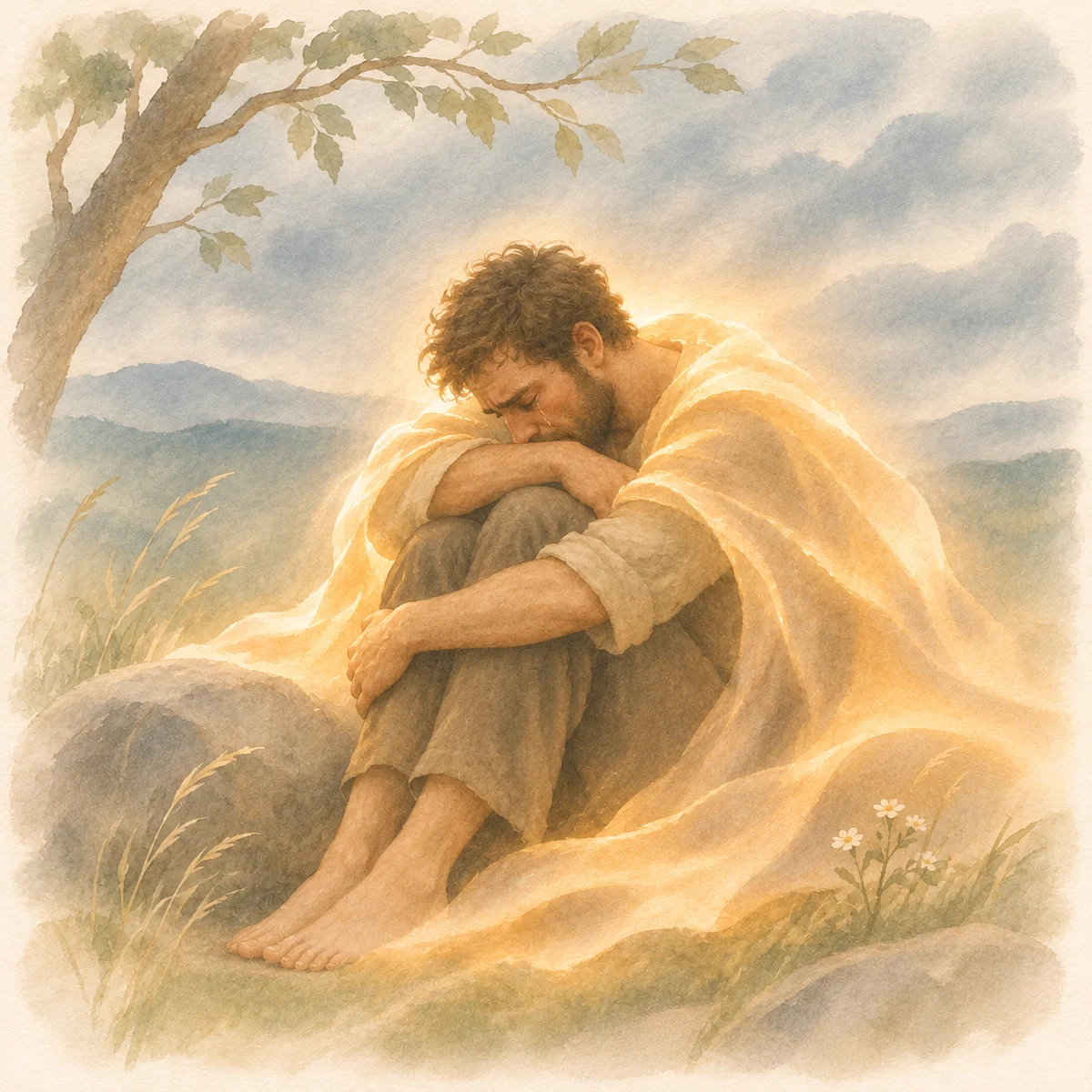
A curled-up figure held in a soft golden shawl of light
From the Heart

Comforter: Love's Other Name

A Reflection on the Holy Spirit and the Comfort of Presence

The Spirit is called Comforter. Counsellor. Advocate. Helper.

Read this reflection Show less

The Spirit is called Comforter.
Counsellor. Advocate. Helper.
But not Avoidance Aider.
Never Escape Enabler.

Still... I’ve often wished it were so.
Especially when someone I love is hurting.

I find myself wanting to fix it,
to make the pain go away—
for them, yes—
but maybe also to spare myself the ache of feeling it.

I forget.
I forget that the Spirit doesn’t promise escape.
That the Spirit’s comfort isn’t found in bypassing the valley—
but in walking with us through it.

The Spirit does not reroute us around heartbreak.
The Spirit stands with us inside it.

Not shielding us from the hard conversations,
or the grief we’d rather avoid,
or the sharp edges of truth—
but showing up right there,
in the tension,
in the discomfort,
in the holy work of staying.

Because peace is not the absence of conflict.

And sometimes—
sometimes what I discover in the valley
is that the comfort I was praying for someone else...
was the comfort my own heart needed all along.

Because Comforter is Love’s other name.

Open on its own page ↗
An open music box among autumn leaves releases glowing musical notes
Meditations

The Song We Forgot Was Ours

A Reflection on the Love That Waits to Be Remembered

"Why didn’t I hear this earlier?" "How did I miss it?"

Read this reflection Show less

"Why didn’t I hear this earlier?"
"How did I miss it?"
"How did I walk past something so beautiful?"

Sometimes the deepest truths
were right beside us all along.
Simple.
Soft.
Too easily dismissed.

Maybe we weren't ready.
Maybe we were listening for something louder—
something more showy.

And so we moved on.
We pressed forward.
We kept searching.

But Love is patient.

It waits,
tucked quietly into the corners of our journey,
until one day—
when we are a little more worn,
a little more tender,
a little more undone—
it stirs.

And we finally hear it:
the melody that had been playing beneath everything.
The song we didn’t know we had forgotten.

Not a new song—
an ancient one.
A homecoming of notes we were always meant to carry.

And it humbles us.
It heals us.
It reminds us that Truth was never in a hurry.
It was never offended by our forgetting.
It simply waited—
patient, steady, sure—
for the day we would remember
it was always ours to sing.

Open on its own page ↗
Fish and bread by a shoreline campfire, with a mug and boat at sunrise
Scripture Revisited

No Lecture. Just Breakfast

A Reflection on Jesus, Peter, and Restoration

He wasn’t waiting at the shore with a sermon. He offered—

Read this reflection Show less

He wasn’t waiting at the shore with a sermon.

He offered—
no lecture.
No “I told you so.”
No holy glare of disappointment.

Just the crackle of a small fire.
And the invitation:
“Come and eat.”

After Peter’s moment of collapse,
the One betrayed returned
not with correction,
but with communion.

Because what mattered more than the failure
was healing the fracture.

Love doesn’t sidestep truth.
But it begins with presence.

There would be questions later.
Soft ones.
Painful ones.
Healing ones.

But first,
He didn’t come to make a point—
He came to make breakfast.

And when the time came to speak,
He asked a question.
Then asked it again.
And again.

“Do you love me?”

Each question echoing a denial.
Each answer peeling back the ache.

And yes—
it hurt.

Not because grace is cruel,
but because it meets us
in the very place we don’t want to feel—
and guides us through it.

And then—
He said,

“Feed my sheep.”

The one who was nourished
is now called to nourish.

Because restoration is passed
like warm bread at breakfast.
It is passed
It is passed
It is passed again.

Open on its own page ↗
Stars and delicate constellations scattered across a blue and violet night sky
Meditations

When the Lines Fade

A Reflection on the Stars We Were Given and the Constellations We Created

There comes a time, for many of us, when the constellations begin to fade.

Read this reflection Show less

There comes a time, for many of us,
when the constellations begin to fade.
The outlines we once trusted—
those shapes that gave us meaning,
that helped us feel safe, certain, guided—
start to blur.

And it can feel like everything’s unraveling.

But the stars?
The stars remain.
They always have.

We were given the stars—
bright, constant, untamed.
But the constellations?
Those were ours.
Our way of making sense.
Our attempt to draw meaning from mystery.

They served their purpose—
as guides, as placeholders,
as maps for the parts of the journey
where we couldn’t yet see clearly.

But freedom comes
when we stop clutching the shapes
and start noticing the light again.

Not every story needs to be redrawn.
Not every connection must be defended.
Sometimes it’s enough
to sit beneath the sky
and let Love trace something new.

Not rushed.
Not forced.
Just patiently—
like a friend who knows the way.

So if the maps are fading,
but the light still flickers overhead,
you’re not lost.
You’re just learning to see again.

And that, in itself,
is holy.

Open on its own page ↗
Dark weathered armour crumbling into a sweep of golden-white light
Scripture Revisited

The Armor That Didn't Fit

A Reflection on David, Saul's Armour, and the Weight of Expectations

There’s a kind of weight that doesn’t feel heavy at first.

Read this reflection Show less

There’s a kind of weight
that doesn’t feel heavy at first.
It feels purposeful.
Sacred, even.

The weight of someone else’s vision—
offered in love,
handed down in faith.

But even holy things,
when not made for us,
can begin to crush the soul
they weren’t shaped for.

For David,
it was Saul’s armor.

For many of us,
it’s the pressure to become
what others believe we’re meant to be—
what they need us to be.

They have conviction.
They have a vision.
They speak of calling and destiny—
and it can sound so much like God
that we don’t always know
where His voice ends
and theirs begins.

To question it?
To name what doesn’t feel right?
Feels like disobedience.
Like failure.
Like letting someone down.

So we wear it.

We wear their interpretations.
Their urgency.
Their hopes.
Sometimes—even their fear.

Until one day,
like David,
something deep within us says,

“I cannot go in these.”

And we begin to take it off.
Not out of defiance.
But out of trust.

Trust in the One
who says our tunic of belovedness is enough.

Open on its own page ↗
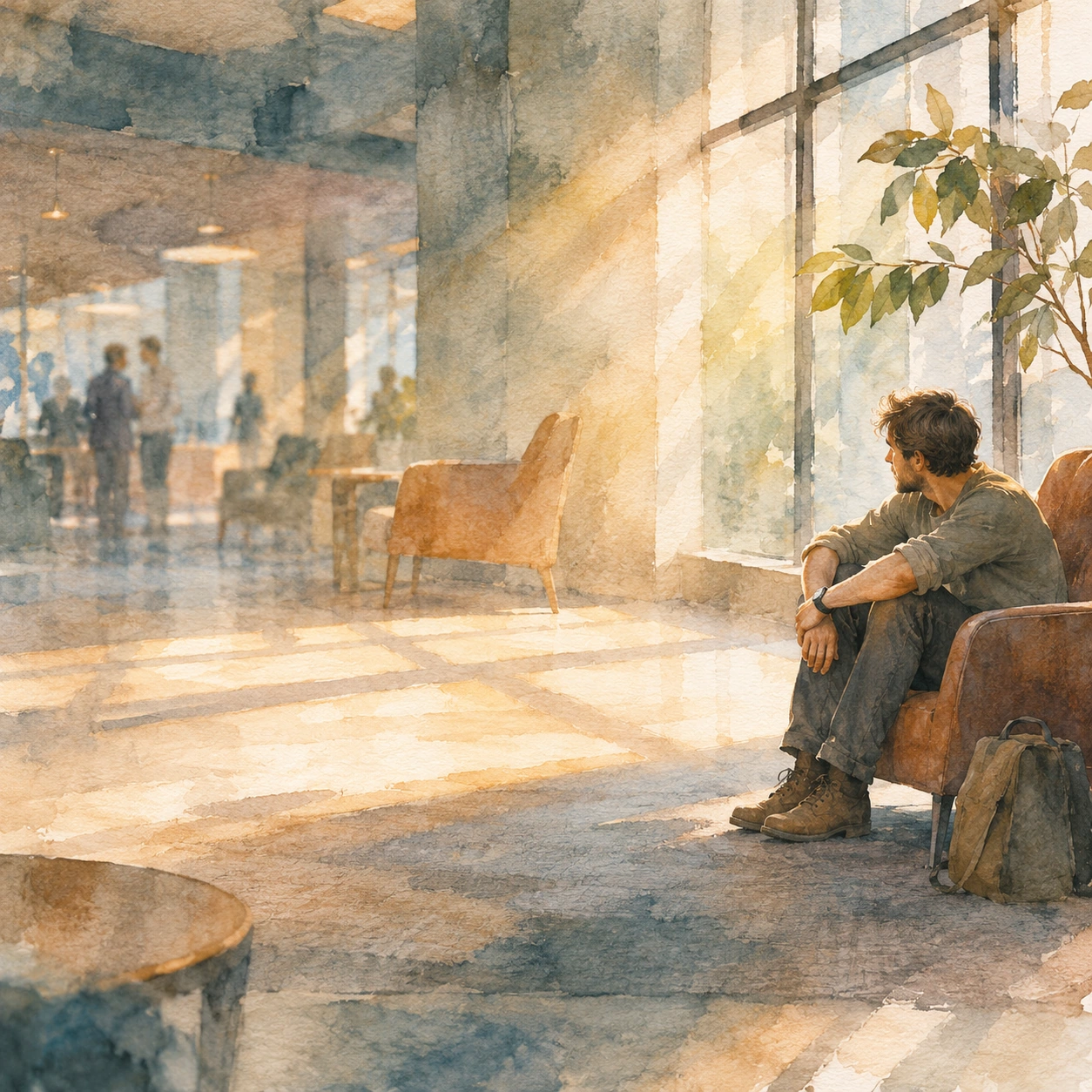
A man sits quietly beside a sunlit window in a modern public space
From the Heart

To the One Who Made Himself Small

A Letter to the Me Who Carried Too Much, Too Quietly

You didn’t break with a bang. You didn’t rage,

Read this reflection Show less

You didn’t break with a bang.
You didn’t rage,
didn’t storm out,
didn’t fall apart in ways that made noise.
You just…
shrunk.
Day by day.
Moment by moment.
Until you could barely feel yourself in the room.

You thought maybe that was kindness.
Maybe that was strength.
To disappear a little,
to hurt quietly,
so others didn’t have to.

In some spaces,
you tried to make peace.
Tried to see everyone.
Tried to hold tension with grace.
But the weight got too heavy—
and when it fell,
it felt like they said it was your fault.

You didn't let it affect you at first.
But slowly,
it crept in.
Maybe I am the problem.
Maybe if I’d been better—
more capable,
more consistent,
less disappointing—
this wouldn’t have happened.

And in other places,
you carried the ache in silence.
The disappointment in your own eyes.
The constant sense
that you were too much
and not enough
at the same time.

You weren’t lazy.
You weren’t careless.
You were tired.
From years of bending.
From decades of trying to be
what everyone else needed.

And when it finally cracked,
you thought maybe the best thing you could do
was vanish just enough
that no one had to carry you.

But friend—
you were never meant to disappear.
Not for peace.
Not for approval.
Not for anyone.

Your presence was not the problem.
Your heart wasn’t too much.
Your ache didn’t make you weak.
It made you human.

You thought love rode on the shoulders of approval.
That rest had to be justified.
That pain was a failure of faith.
But none of that was true.

The truth is...
you were worthy before you pleased a single person.
You were loved before you held a single thing together.
And you still are.

Even now.
Especially now.
When you're learning not to disappear.
When you speak a little louder.
Take up a little more space.
Let yourself need.
Let yourself be.

You're not too much.
You're not a disappointment.
You're still here.
And that is not failure.
That’s grace.

Open on its own page ↗
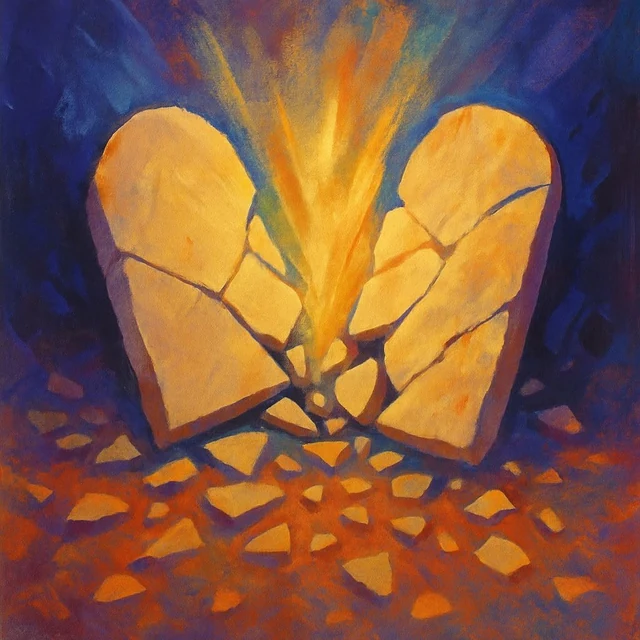
Two golden stone tablets shatter as light rises between their fragments
Scripture Revisited

When the Tablets Break

A Reflection on Moses and a Grace in the Breaking

We know the story. Moses climbs the mountain.

Read this reflection Show less

We know the story.

Moses climbs the mountain.
Receives the words—
the law, carved in stone, untouched by human hands.

But before he can deliver it,
the people turn away.

And Moses—
tired, aching, undone—
breaks the tablets.

Was it anger? Failure? Heartache?
Maybe it was all of it.
Maybe it doesn’t matter.
Because what matters most
is what happened next.

He goes back.
Up the mountain again.
But this time,
not just with stone—
with longing. With loss.
With a heart cracked wide open.

And in that place,
he doesn’t ask for clearer rules.
He asks for something deeper:
“Show me your glory.”

And God says yes.

Not with thunder.
Not with fire.
But with presence.
With quiet goodness.
With a name that reveals the heart behind it all:

Gracious.
Compassionate.
Slow to anger.
Rich in love.

And when Moses comes down,
he’s glowing.

Not because he got it all right—
but because he stood in the space
between failure and mercy
and found that God was still there.

This is what grace looks like.

Not a reset button—
a deeper beginning.

Not just a second chance for Moses—
but for the people.
For all of us.

A movement from rule-keeping
to relationship.
From striving
to knowing who Love really is.

The glory isn’t in perfection.
It’s in the presence that meets us after.
In the return.
In the breaking
that opens the way.

Open on its own page ↗
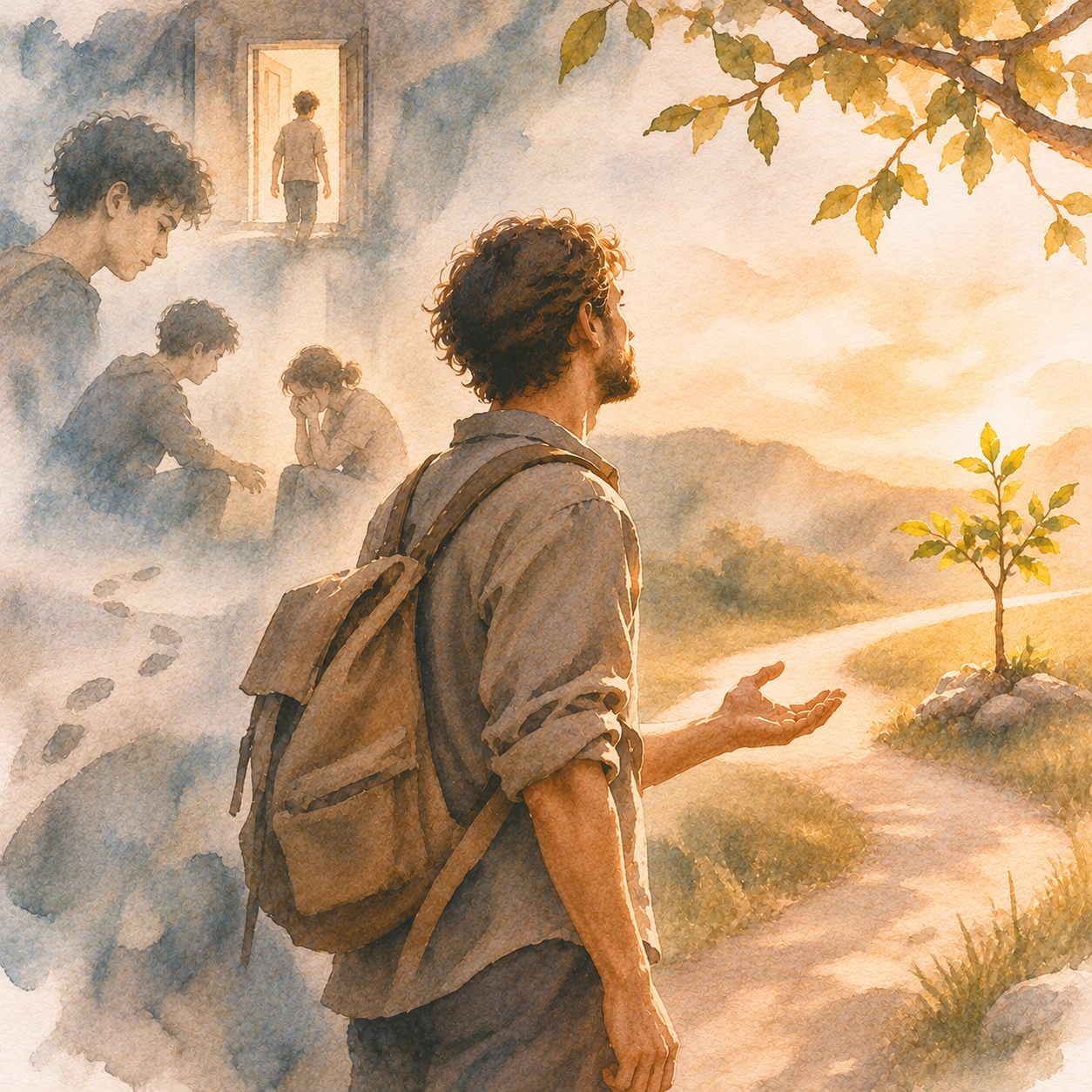
A modern man with a backpack faces a sunlit path while fading memories of his younger self linger behind him
From the Heart

The Wisdom We Want Too Soon

A Reflection on Regret and the Wisdom That Comes Later

Sometimes I dream of walking back through time

Read this reflection Show less

Sometimes I dream
of walking back through time
with today’s eyes.
to stand in rooms I once fled,
to love better, speak braver,
to not be so afraid
of being the fool.

I wondered if it was a holy ache
to be more kind, more whole, more good
for the ones I once failed, or hurt,
or simply misunderstood.

But truth be told,
It’s not just a longing to do better,
but a longing to be seen
as someone who knew better all along.

And maybe that’s okay.
Because it's the reality of being human.
As you don’t get the numbers
before the draw.

Wisdom grows in the gap
between who you were
and who you’re becoming.

And unlike missing the lottery,
its value doesn’t vanish
when the moment is gone.
It carries forward—
not to erase the past,
but to reshape what’s next.

So no—
you don’t get to go back.
But you do get to go on.
And maybe that’s the gift:
not a chance to revise,
but a chance to redeem.
Not by changing what was,
but by letting it
change you.

Open on its own page ↗
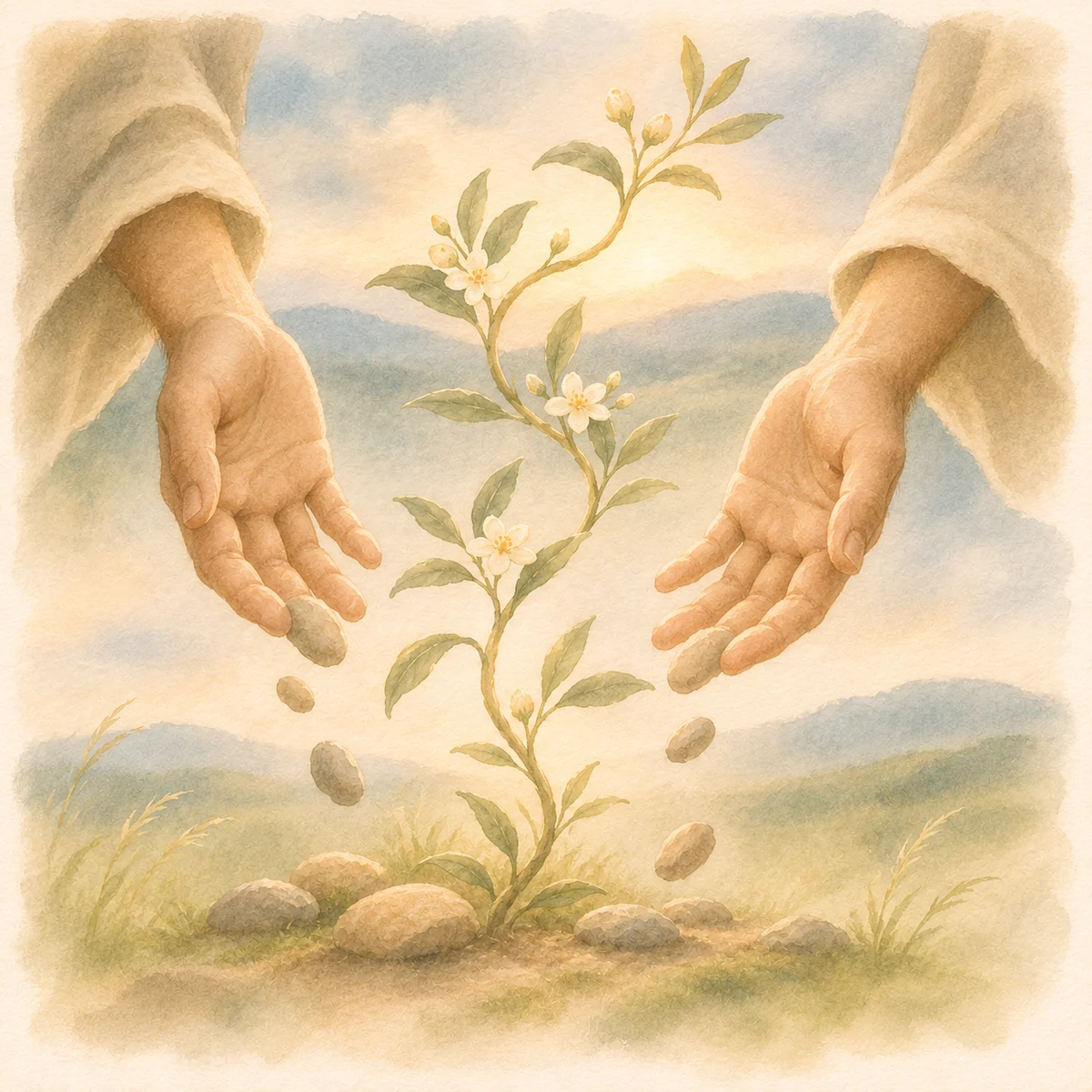
Two open hands let stones fall around a small flowering green plant
Seeing Differently

Justice Is Not an Eye for an Eye

A Reflection on Jesus and Restorative Justice

Justice is not “an eye for an eye.” Justice is feeding the hungry.

Read this reflection Show less

Justice is not “an eye for an eye.”
Justice is feeding the hungry.
It’s welcoming the stranger.
It’s seeing the divine in the one the world forgot.

Jesus didn’t point us toward retribution.
He pointed us toward restoration.
“Whatever you did for the least of these,” he said, “you did for me.”

True justice doesn’t keep score.
It tears down every barrier that keeps love from flowing freely.
It doesn’t ask, “What do they deserve?”
It asks, “What do they need?”

Justice, in the way of Christ,
is not about limits.
It’s about breaking them.
Breaking the silence.
Breaking the cycles.
Breaking the walls that keep us from one another.

Because when love is allowed to flourish,
when no one is left unfed, unseen, or unloved—
that is justice.

Open on its own page ↗
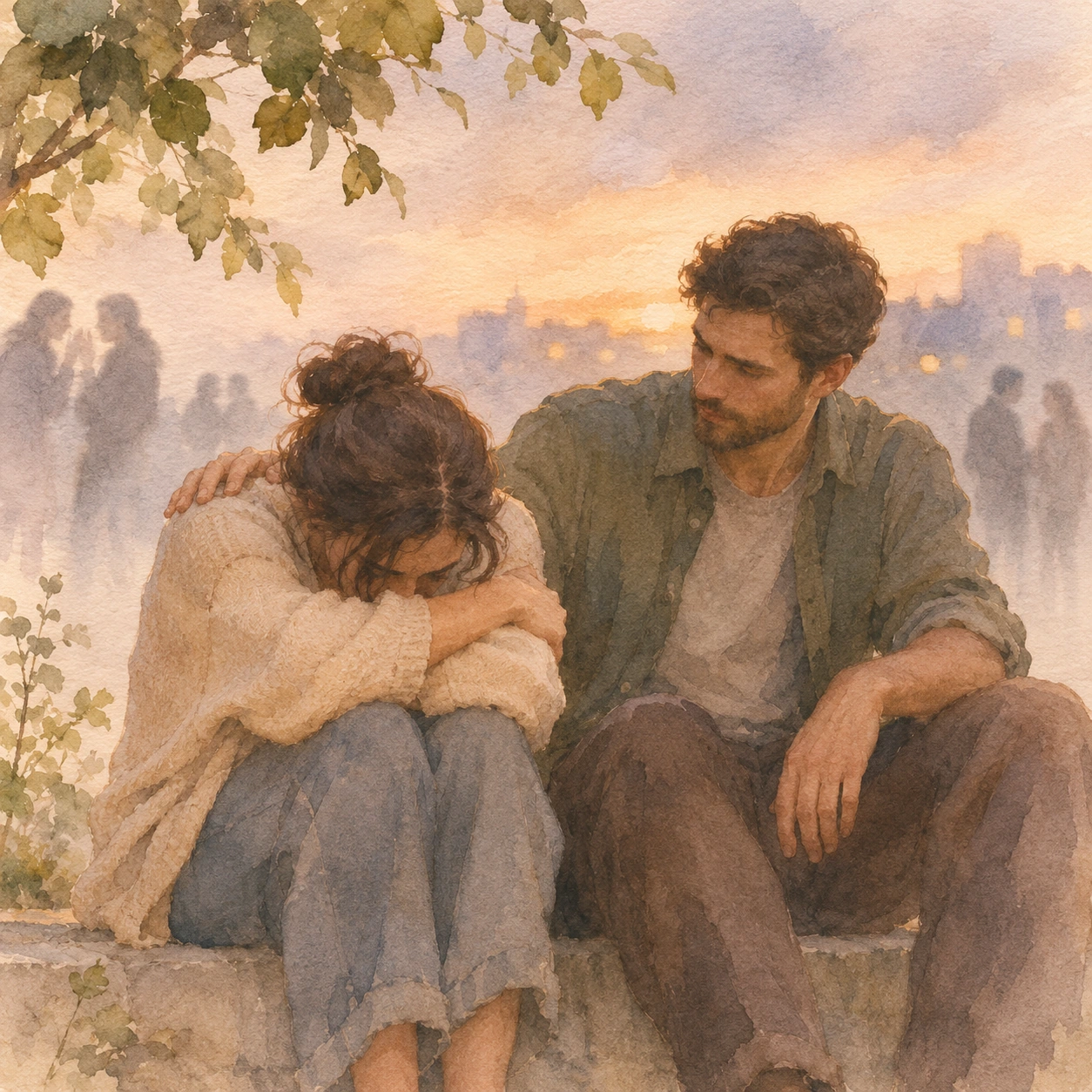
Two friends sit together as one comforts the other in a modern city park
Seeing Differently

When the Scandal Isn’t Theirs Alone

A Reflection on Exposure, Envy, and the Longing to Be Known

We love a downfall. Not because we’re cruel

Read this reflection Show less

We love a downfall.
Not because we’re cruel
(at least, most of us aren’t),
but because, in a way,
it gives us a strange kind of hope.
Hope that we’re not the only ones
cracking at the edges.
Hope that maybe if they got caught,
and the world kept turning,
maybe we’d survive our undoing too.

There’s something almost addictive
about watching someone else's secrets spill.
We call it justice.
We call it moral outrage.
But often, it’s just relief—
a hit of borrowed shame
that feels safer than our own.

Because what we fear most
isn’t being wrong.
It’s being seen.
Not corrected,
but exposed.
The parts of us
we’ve wallpapered over with performance
and praise
and projections of who we wish we were.

But some friendships
know how to hold the weight.
The kind where someone
doesn’t flinch
when you confess what you swore
you’d never speak.
Who can sit with your mess
before it becomes a headline.
Not to erase it.
Not to fix it.
But just to stay.

Because the power of shame
isn’t in the thing itself.
It’s in the belief
that no one will love you through it.

But love that holds on
in the quiet,
in the trembling admission,
in the slow, stubborn work
of becoming whole—
that kind of love makes exposure
lose its teeth.

So maybe it’s not about staying above reproach.
Maybe it’s about staying within reach.
Letting others in
before the story breaks.

Not so they can fix you.
But so you don’t have to carry it
alone.

Open on its own page ↗
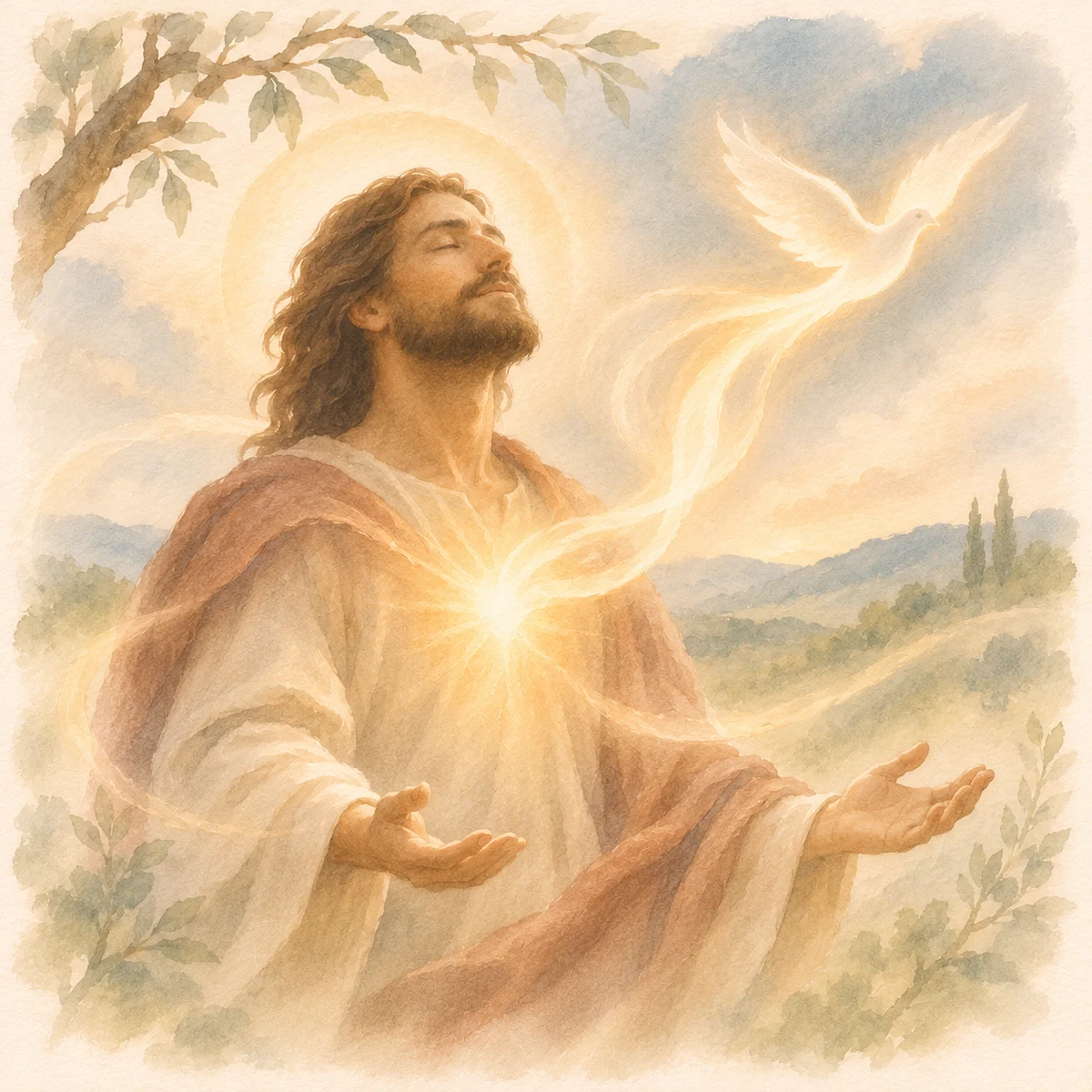
A robed figure radiates warm light as a luminous dove rises nearby
Seeing Differently

If Jesus Is, in Very Nature, God

A Reflection on the Trinity and the Nature of Divine Love

If Jesus is, in very nature, God— and Jesus is, in very nature, Love—

Read this reflection Show less

If Jesus is, in very nature, God—
and Jesus is, in very nature, Love—
then God is, in very nature, Love.
Not just loving,
but Love itself.

And if God is Love,
then the Spirit is not separate or secondary.
The Spirit is the shared essence—
the invisible current,
the divine breath,
the living bond between Father and Son.

They share one nature.
One heart.
One Spirit.

The Spirit of Divine Love.
Love that creates.
Love that descends.
Love that stays.
Love that fills all things.

Not an agent of transaction,
but the flow of relationship.
The echo of “let us.”
The breath between words.

The Spirit is not the extra.
It is the essence.
The aliveness
of Love itself.

Open on its own page ↗
A woman sits at a laptop while a shadow represents her inner critic
From the Heart

The Voice Calling You an Imposter

A Reflection on Fear, Belonging, and the Courage to Begin

The voice calling you an imposter is just fear, twisting the truth. The truth is... you are adaptable.

Read this reflection Show less

The voice calling you an imposter is just fear, twisting the truth.
The truth is... you are adaptable.
You’ve learned to breathe in unfamiliar air,
to stand on ground you’ve never walked before,
and still find your balance.

Inexperience doesn’t mean unqualified.
Who you are is greater than what you know.
Don’t believe the lie that you don’t belong.
Lean into the truth—
and you’ll be surprised by what you’re capable of.

Open on its own page ↗

2026

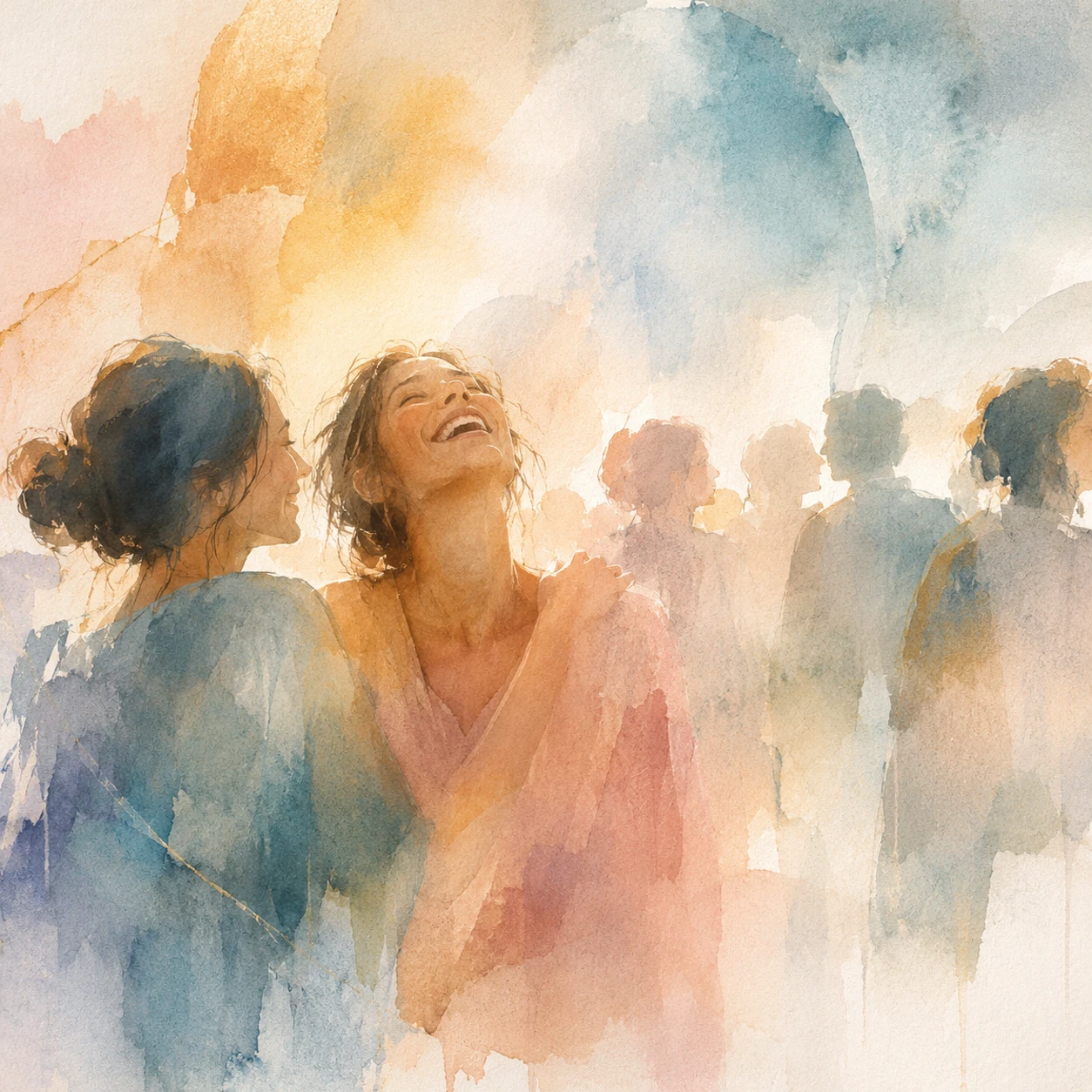
Two women sharing a moment of joyful laughter in a soft modern watercolour.
Seeing Differently

A Life Not Meant to Be Won

The empathy of joy

Is life a zero-sum game? Is it really all about winning?

Read this reflection Show less

Is life a zero-sum game?
Is it really all about winning?
And if you're not winning, does that make you a loser?

Perhaps one of our greatest mistakes is believing that life is something to be won rather than something to be lived.

Another's success need not be our failure.
Another's abundance need not be our poverty.
Another's joy need not diminish our own.

As scarce as empathy is, perhaps even scarcer is the empathy of joy — the ability to delight in another's flourishing, even when it is the very flourishing we ourselves long for.

“Rejoice with those who rejoice;
mourn with those who mourn.”

— Romans 12:15

Love invites us not only to share in another's sorrow, but to delight in their flourishing.

Perhaps the beauty of life is discovered not in getting ahead of one another, but in learning to flourish alongside one another.

Perhaps there was never a scoreboard at all.

Open on its own page ↗